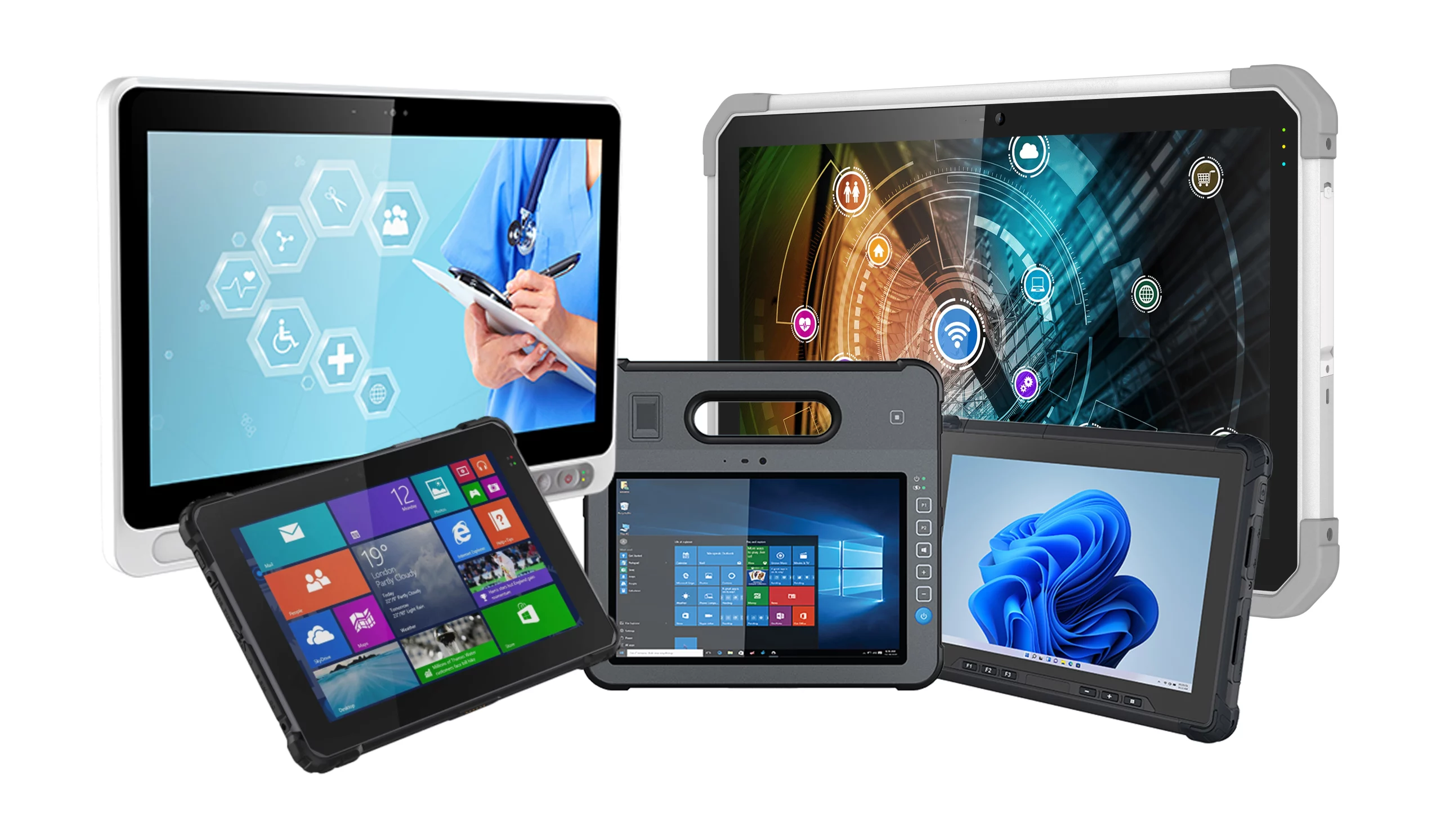
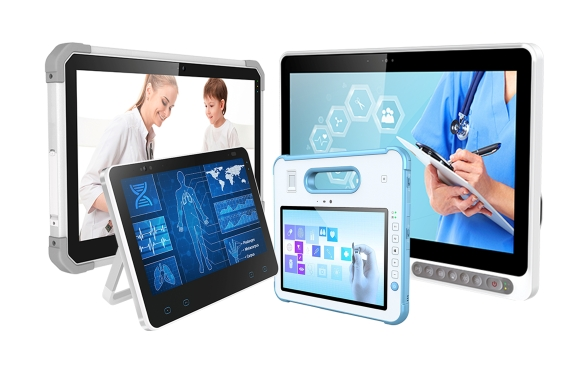
The healthcare industry is undergoing rapid transformation as new technologies reshape the way care is delivered. From diagnosis to administration, medical professionals now rely on mobile technologies such as computers on wheels, workstations on wheels, and medical-grade tablets to improve efficiency and accuracy. Increasingly, these devices are being enhanced with artificial intelligence (AI), unlocking new possibilities for patient care and clinical workflows.
Medical-Grade Tablets
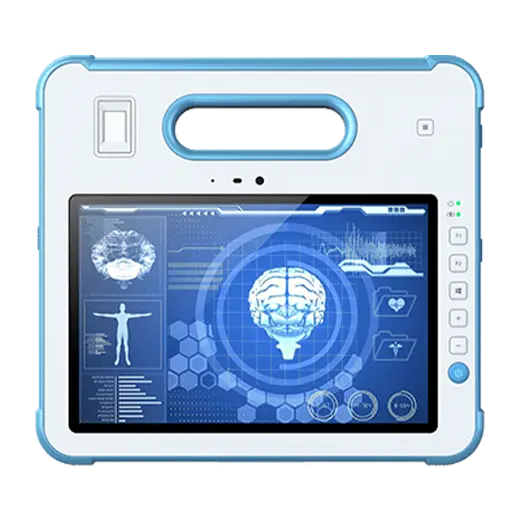
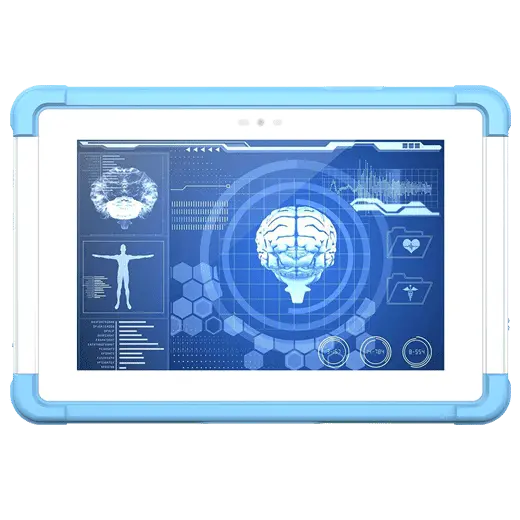
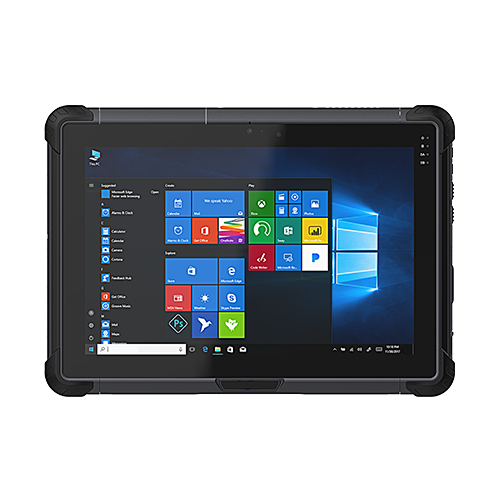
Medical-grade tablets are purpose-built for healthcare environments, designed to meet strict durability, safety, and compliance standards. Before entering the market, these devices undergo rigorous certification processes. For instance, IP66/IP67 protection ratings ensure they can be safely disinfected without harming internal components, while MIL-STD-810 certification guarantees resistance to drops, shock, humidity, and extreme temperatures.
Additional features include cybersecurity safeguards such as data encryption and role-based access controls, as well as compliance with IEC 60601-1 safety standards, preventing interference with sensitive medical equipment. Medical-grade tablets are also engineered for compatibility with both modern and legacy systems, offering ports that range from USB-C to serial connections, ensuring seamless integration with existing hospital infrastructure.
Applications of Medical-Grade Tablets
More portable than traditional workstations or computers on wheels, medical-grade tablets support a wide variety of use cases:
Electronic Health Records (EHR)
Clinicians can instantly access and update patient records at the point of care, reducing delays and improving treatment accuracy.
Medical Administration
Tablets streamline hospital operations such as medication tracking, barcode scanning, and inventory management. This reduces errors and increases efficiency compared to outdated paper-based systems.
Emergency Services
Rugged tablets are essential tools for paramedics and ambulance crews. Drivers use them for real-time navigation, while medical staff monitor patient vitals and relay data back to hospitals—even under harsh conditions.
Connection to Medical Equipment
Equipped with a wide variety of I/O ports, medical-grade tablets connect seamlessly with both modern and legacy medical devices, enabling data collection, analysis, and interoperability.
Benefits of Medical-Grade Tablets
Healthcare providers benefit from rugged medical-grade tablets in several ways:
Convenience & Mobility
Lightweight designs, optional carrying handles, and shoulder straps allow tablets to be used comfortably throughout the day, whether in a hospital ward or during home visits.
Security
Advanced security measures such as encryption, RFID, smart card authentication, and password protection safeguard sensitive patient information.
Reliability in Demanding Environments
Built to withstand drops, spills, and constant disinfection, rugged tablets ensure uninterrupted performance in critical environments such as ICUs, operating rooms, and emergency transport.
Medical-Grade Tablets with AI
When enhanced with AI, medical-grade tablets become more than just digital record-keeping tools. They evolve into adaptive, context-aware assistants that continuously learn from clinical usage patterns. By anticipating caregiver needs, adjusting interfaces for different environments, and delivering real-time insights, AI-equipped tablets shorten training curves, improve usability, and support faster, more accurate decision-making.
The Benefits of Incorporating AI in Medical-Grade Tablets
AI integration is transforming tablets into powerful clinical tools, enabling advanced capabilities that directly enhance patient care and provider efficiency.
Enhanced Imaging
AI algorithms enable real-time video enhancement, noise reduction, anomaly detection, and tissue segmentation, supporting advanced diagnostic accuracy in fields such as radiology, dermatology, and endoscopy.
Automated Workflow
AI streamlines documentation by auto-populating records, extracting data from clinical notes, and enabling hands-free operation through voice or gesture commands—especially valuable in sterile or constrained environments.
Decision Support
AI-powered decision support systems can analyze patient-specific data to suggest diagnoses, prioritize triage, and detect risks, helping clinicians act with greater confidence and speed.
Remote Collaboration and Telemedicine
AI enables efficient, secure data sharing with features like intelligent compression, live annotation, and automated reporting, making it easier for specialists to collaborate across locations.
Medical-grade tablets are redefining the way healthcare is delivered by combining durability, portability, and advanced technology in a single device. Rugged designs ensure reliability in even the most demanding clinical environments, while built-in security and interoperability make them indispensable for modern healthcare operations. When enhanced with AI, these tablets evolve into intelligent assistants that support faster decision-making, streamline workflows, and improve patient care outcomes. By integrating ruggedness with intelligent functionality, medical-grade tablets empower healthcare professionals to work more efficiently, confidently, and effectively—anywhere care is needed.